Modern offices look very different to how they did a decade ago. Hybrid working, hot-desking and flexible team structures have changed how people use their workspace - but one need hasn't gone away: employees still need somewhere secure, personal and accessible to store their belongings.
Office lockers have evolved to meet that shift. Today's best solutions are as flexible as the workforces they serve - configurable by size, finish, lock type and layout to suit the specific demands of your space. Whether you're fitting out a new office, refreshing an existing one, or solving a storage problem that's been quietly frustrating your team, getting the locker specification right makes a real difference.
At Staverton, we design and manufacture office lockers in Britain, working closely with facilities managers, interior designers and fit-out teams to specify and deliver the right solution for every project. This guide covers everything you need to know - from locker types and smart locking systems, to space planning, sustainability and what to look for in a supplier.
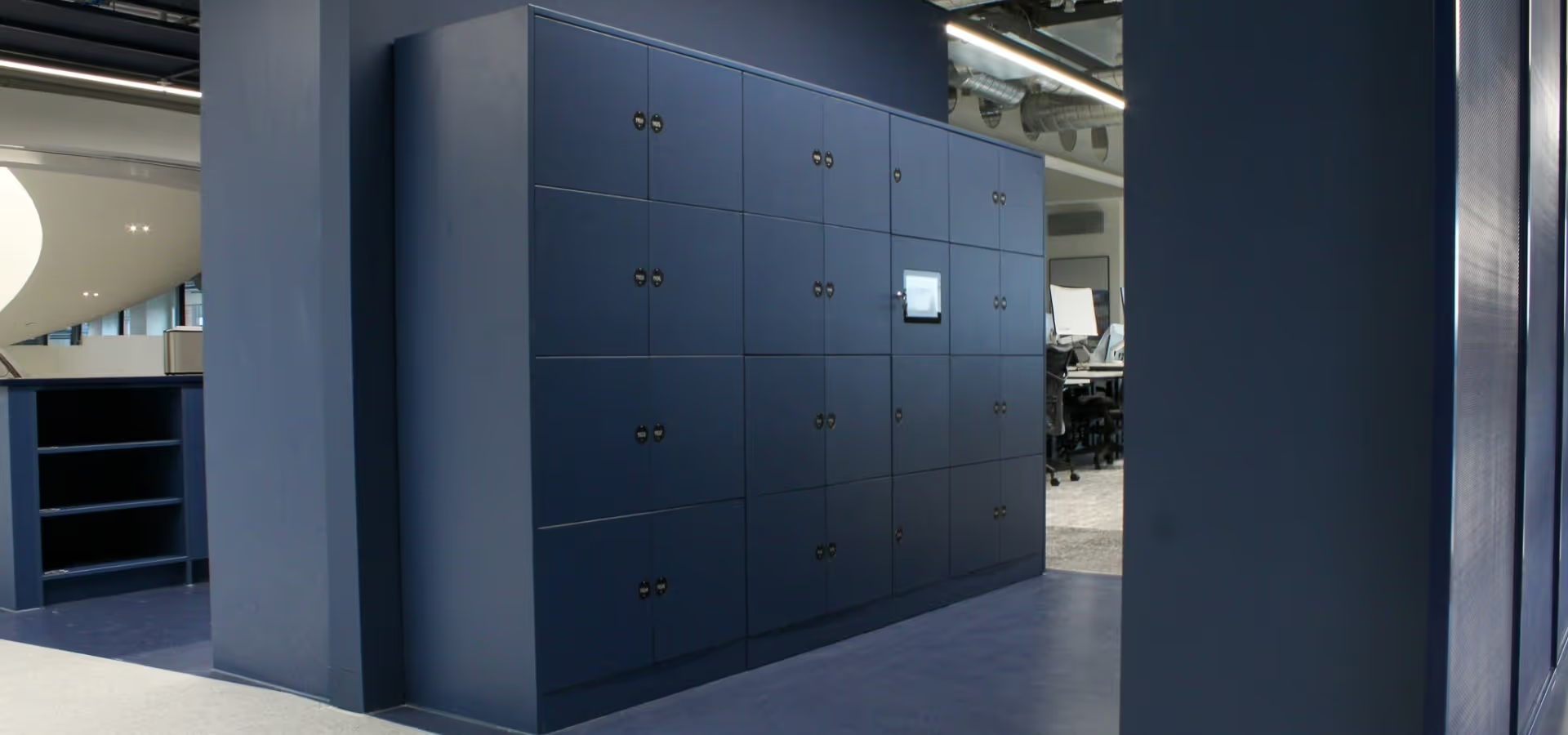
The way we work has changed permanently. For many organisations, the office is no longer a place where every employee has a fixed desk and a dedicated drawer. Hot-desking, agile working and hybrid schedules mean that personal, permanent storage is less common, but the need for somewhere secure to put a bag, a coat, a laptop or personal items hasn't disappeared.
Without adequate storage, the problems are predictable: cluttered desks, items left on chairs, bags blocking walkways, and a general sense that the workspace wasn't quite designed with the people in it in mind. For employees, it's a daily friction. For facilities managers, it's a complaint that doesn't go away.
Office lockers solve that cleanly. A well-specified locker bank gives every employee, whether they're in three days a week or five, a secure, personal space that's theirs for the day orassigned long-term. It supports clear desk policies, contributes to a tidierand more professional environment, and signals to staff that their comfort and security has been considered.
Done well, office storage is less a facilities decision and more a workplace wellbeing one.
The right lock isn't just a security decision - it's a usability one. The best lock for your workplace depends on how your team works, who's administering the system, and how easy day-to-day access needs to be. Staverton's lock range has been selected with both the employee and the administrator in mind, and the team can advise on the right solution for your specific environment.
OFFICE LOCKER LOCK CARDS AND COMPARISON CHART
Finish and colour matter more thanthey're often given credit for. A locker bank that jars with the surrounding office - wrong tone, wrong material, wrong scale - undermines the overall feel of a space that may have had significant investment put into it. Conversely, lockers that are well-matched to their environment contribute to a cohesive, professional atmosphere that employees and visitors both notice.
Staverton lockers are available in a wide range of finishes and colours, and the in-house design team can work directly with interior designers and fit-out teams to ensure the specification sits comfortably within the wider scheme.
Whether that means matching an existing palette, complementing a material story, or something more bespoke, that conversation is a normal part of the Staverton process.
Office lockers are visible, permanent fixtures. In a well-designed workplace they shouldn't look like an afterthought. They should feel like a considered part of the environment, consistent with the wider interior scheme and built to last in a high-traffic setting.
Cheap lockers have a visible lifespan. In a busy office environment - doors opened and closed dozens of times a day, exposed to the kind of wear that accumulates fast - poor construction shows quickly.
Hinges fail, surfaces chip, locks become unreliable.
British-made quality means Staverton lockers are built for that reality. Robust materials, quality hardware and considered construction mean a longer product life and a lower total cost over time. Buying well once is almost always more economical, and more sustainable, than replacing cheap twice.
When specifying for longevity, it's worth asking not just what the locker looks like on day one, but how it will perform in year five.
Specifying the right locker is only half the job. Where lockers are placed, how they're arranged, and how they interact with the flow of a space are just as important as the product itself.
And that's where a lot of office storage projects fall short.
A poorly positioned locker bank creates bottlenecks. Lockers crammed into a corridor become a daily frustration. A configuration that looked right on paper can feel overwhelmingin a room that wasn't quite measured with it in mind. These are avoidable problems, but they require spatial thinking from the start of a project rather than at the end.
Staverton's approach is consultative from the outset. The in-house design team works directly with facilities managers, interior designers and fit-out teams to understand not just the storage requirement, but the space it needs to live in. How many people will be using it and when? Is there a natural home for a locker bank, or does it need to be worked into the layout more creatively? Could a locker configuration double as a room divider, a feature wall, or a wayfinding marker? These conversations happen before anything is specified, and they're part of what makes the difference between lockers that work and lockers that just exist in a room.
For clients who want to see configurations in person before committing, Staverton's showroom offers exactly that. Experience different locker setups, test lock mechanisms, assess finishes and ask questions of the people who design and build them. For a product that will be used every day by your whole team, that kind of hands-on confidence is worth the trip.
A locker system is only effective if every employee can use it comfortably and confidently. Accessibility and inclusivity are considerations that are too often bolted on at the end of a specification process, but they're much easier to get right when they're built in from the start.
Locker height, door weight, handle design and lock mechanism all affect how usable a locker is for employees with different physical needs. A full height locker bank with controls at the top may work perfectly well for most people and present a genuine barrier for others. Bottom drawer configurations, considered placement within a bank, and the right choice of lock mechanism can collectively make a locker system genuinely accessible without compromising on the overall design.
Staverton's design team can advise on accessible configurations as a standard part of the specification process. It's a conversation that should happen early, not as a last-minute adjustment.
The right lock for your workplace isn't just about security, it's about who's using it and how.
A combination lock that suits one employee may frustrate another. A key-based system that feels simple to manage can create significant administrative overhead at scale. Digital and smart locking systems can simplify access for employees while giving administrators a cleaner, more manageable system on the back end.
Staverton's lock range has been selected with both usability and administration in mind. The goal is a system that works effortlessly for the person opening the locker every morning, and just as effortlessly for the facilities manager overseeing the whole bank.
Employees store personal belongings, devices and occasionally sensitive materials in workplace lockers. A secure, well-specified office locker system is part of an employer's broader duty of care. And in environments where data security matters, it's worth considering how locker security fits into the wider picture.
Smart lockers are one of the most significant developments in workplace storage in recent years. For organisations managing hybrid teams, hot-desk environments or high-security requirements, they represent a meaningful upgrade on traditional locking systems. At their simplest, smart lockers replace physical keys or combination dials with digital access - via PIN, RFID card, fob or mobile app. But the real value goes beyond the mechanism itself:
SMART LOCKER BENEFIT CARDS
Staverton's smart locker options have been selected with the same usability principles that run through the entire range.
Straightforward for the employee, manageable for the administrator, and specified to suit the particular demands of your workplace.
If you're unsure whether smart lockers are the right fit, that's exactly the kind of question the team can help work through.
Sustainability is an increasingly important consideration in workplace fit-out decisions, and rightly so. For many organisations, procurement choices are now scrutinised against ESG commitments, supply chain ethics and whole-life environmental impact. Office furniture and storage are no exception.
Staverton lockers are designed and manufactured in Britain, at the company's factory in Lancashire. That's not just a quality story, it's a supply chain one too. Shorter distances from factory to site mean a lower transport footprint compared to products manufactured overseas and shipped to the UK. It also means greater visibility and control over how products are made, and by whom. For clients with ESG reporting requirements or supply chain due diligence obligations, British manufacturing provenance is a straightforward, demonstrable credential.
The most sustainable product is one that doesn't need replacing. Staverton lockers are built for the long term. Robust construction, quality materials and considered hardware mean a product lifespan that outlasts cheaper alternatives significantly. In whole-life cost terms, a well-specified British-made locker will almost always prove more economical and more sustainable than a lower-cost product that needs replacing within a few years.
Specifying for longevity is one of the simplest sustainability decisions a procurement team can make.
Staverton's approach to manufacturing reflects a broader commitment to doing things properly.
Quality over volume, considered material choices, and a manufacturing process that the team stands behind. For clients who want to understand more about how their products are made, that conversation is an open one.
Choosing the right locker supplier is about more than product. The specification process, the design support, the manufacturing quality and the relationship after delivery all affect whether aproject lands well, and whether it stays that way. For facilities managers and fit-out teams comparing suppliers, these are the criteria worth weighing up.
OFFICE LOCKER SUPPLIER POINTS TO CONSIDER CARDS OR CHECKLIST
Staverton meets every one of those criteria, and we've been doing so for clients across the UK for years. If you're at the stage of comparing suppliers or putting together a specification, we'd love to have that conversation. Whether you'd like to visit the showroom, request a brochure, or talk through a project brief, the next step is straightforward.
Yes. Staverton lockers are available in a wide range of finishes and colours, and the in-house design team can work with your interior scheme to ensure the specification sits comfortablywithin the wider environment. If you have a specific colour or finish requirement, that's a conversation worth having early in the process.
Staverton offers a range of lock types selected with both employee usability and administrator management in mind - including key locks, combination locks, RFID and digital smart locking systems. The right choice depends on your workplace setup, how lockers will be allocated, and your administration requirements. The team can advise on the best fit for your specific environment.
As a British manufacturer with a factory in Lancashire, Staverton is able to offer faster turnaround times than many overseas suppliers. Lead times vary depending on specification and projectscale - contact the team for an accurate timeline for your project.
Yes. Staverton's consultative approach means the design team works with you to understand not just the storage requirement but the space it needs to live in. Whether you're working with an architect, an interior designer or managing the fit-out directly, the team can support the spatial planning process from early specification through to installation.
Yes. Staverton works with clients across the UK. Whether your project is a single office fit-out or a multi-site rollout, the team can discuss delivery and installation requirements as part of the specification conversation.
Yes, and it's strongly recommended! Staverton's showroom gives you the opportunity to see locker configurations, test lock mechanisms and assess finishes in person before committing to a specification. It's particularly useful for projects where design integration or lock usability are important considerations. Get in touch to arrange a visit.
Staverton is a British designer and manufacturer with an in-house design team, a factory in Lancashire and a consultative approach to every project. That means the product can be tailored to your specific needs, not the other way around. From bespoke configurations and finish matching to space planning support and fast turnaround times, the focus is on solving the problem properly rather than selling from a standard catalogue.